Injury patterns
Atlanto-occipital dislocation / atlanto-axial dissociation
Atlanto-axial rotary subluxation
SCIWORA (spinal cord injury without radiological abnormality)
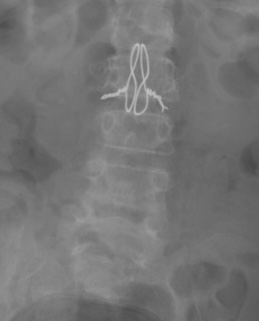
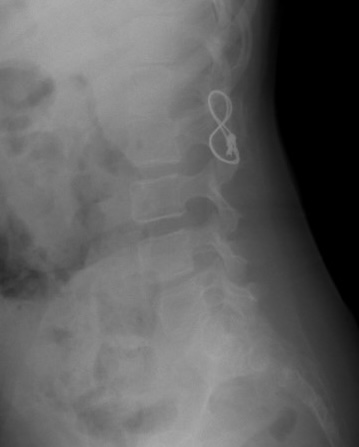
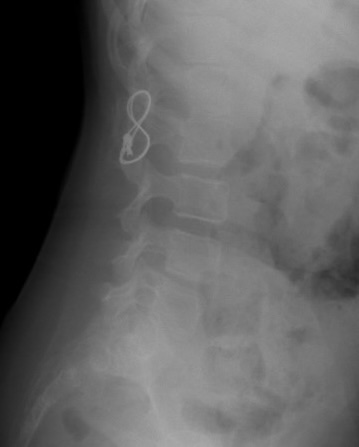
Thoracolumbar fractures
Epidemiology
Younger children - upper cervical injuries most common due to large head
Older children - thoracolumbar injuries most common
Etiology
MVA - most common
Fall from heights
Obstetric complications
Sports - older children
Non accidental injury
Cervical spine immobilization
Young children < 8 year
- have very big heads that will flex neck on spinal board
- need elevation under thoracic spine or cut out for head
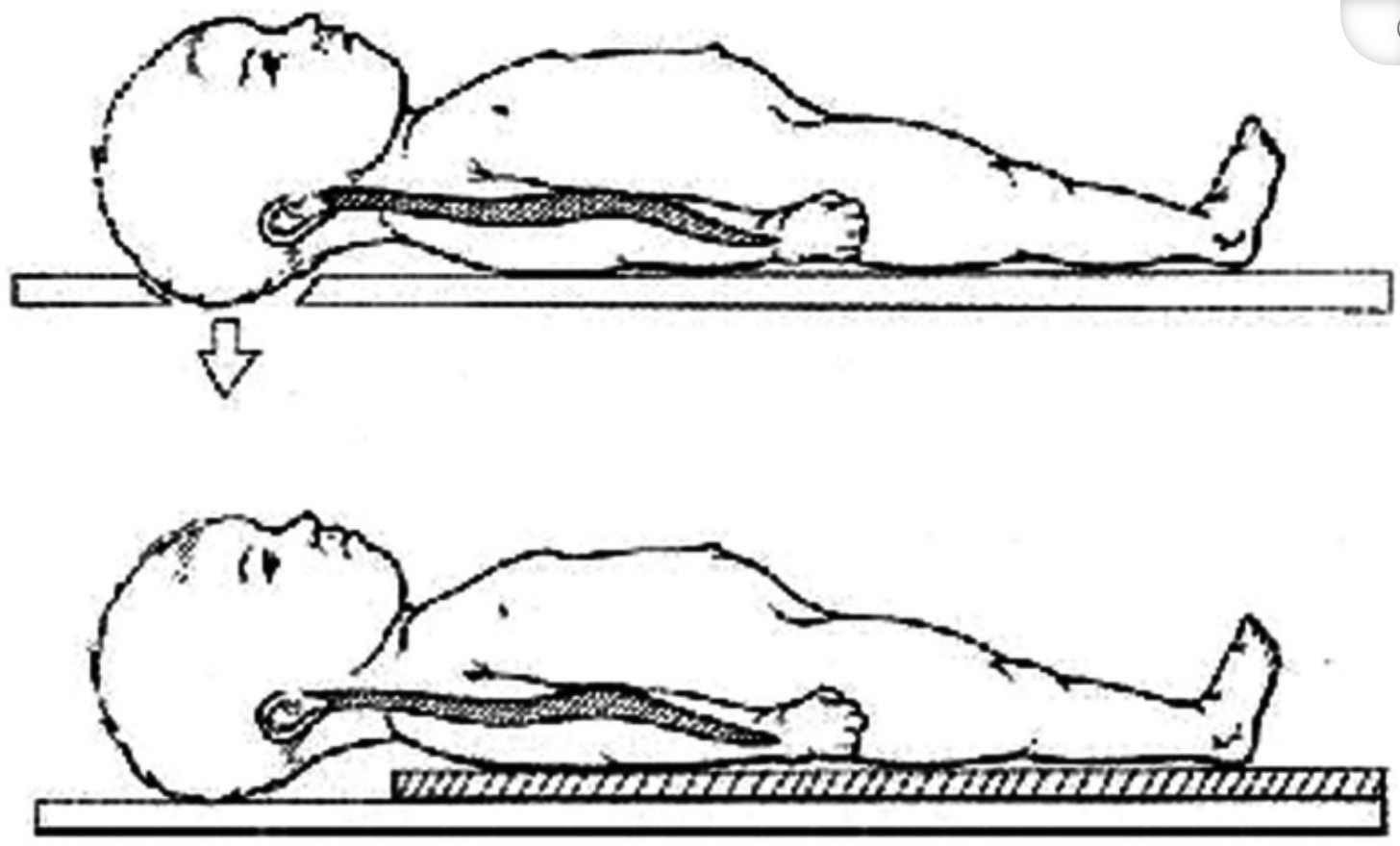
From: Basu Front Neurol 2012
Xrays
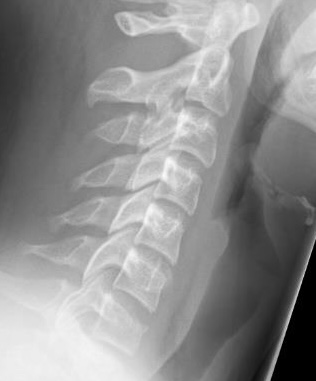
Pediatric cervical spine xrays unreliable as much of cervical spine cartilaginous
C2/3 pseudosubluxation
- up to 4 mm common
- seen in 40% patients < 8 years old
- Swischuk's Line drawn along spinolaminar line C1 & C3 / C2 should be within 1.5 - 2mm of this line
Cervical vertebral bodies classically wedged
Normal synchondrosis between dens and body of C2
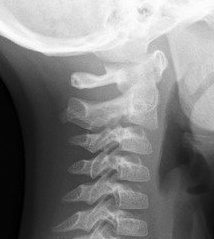
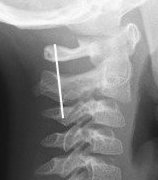
Pseudosubluxation C2/3 with normal Swischuk's line
Axis - has 3 primary ossification centers (body and two arches) that fuse age 7
Atlas - has 4 primary ossification centers (body, 2 arches, dens), dens fuses age 6
CT
Essential for diagnosing fractures
MRI
Up to 20% of pediatric injuries purely ligamentous
Atlanto-occipital dislocation
Devastating injury / often fatal
www.boneschool.com/cervical-spine/atlanto-occipital-dislocation
Atlanto-axial rotatory instability
www.boneschool.com/cervical-spine/atlanto-axial-rotatory-instability
SCIWORA (Spinal cord injury without radiographic abnormality)
Issue
Cervical spine very flexible in children < 8
- ligamentous laxity / shallow facet joints / vertebral bodies wedge shaped
Can have up to 5 cm traction injury to cervical spine without evidence of fracture
- causes severe injury to spinal cord
- present with spinal cord injury
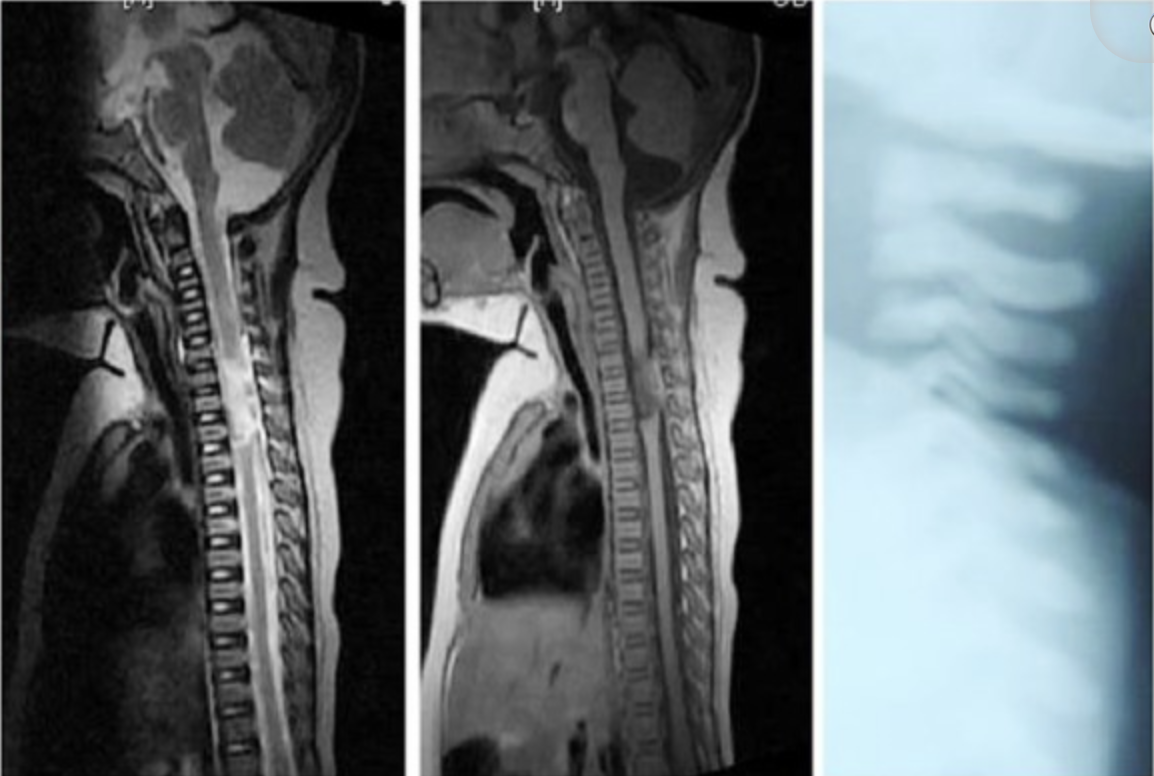
From: Basu Front Neurol 2012
Management
Diagnose with MRI
Immobilize 3 months
Beware second SCIWORA event which can occur
Thoracolumbar fractures
Epidemiology
- 90 children with thoracolumbar fractures
- mean age 15 (range 2 - 18)
- 70% fall from height, 20% MVA
- 20% required surgical fixation
Management
Compression / burst fractures most common
Options
- brace
- posterior stabilization with pedicle screws adolescents
- posterior wiring in very young patients