
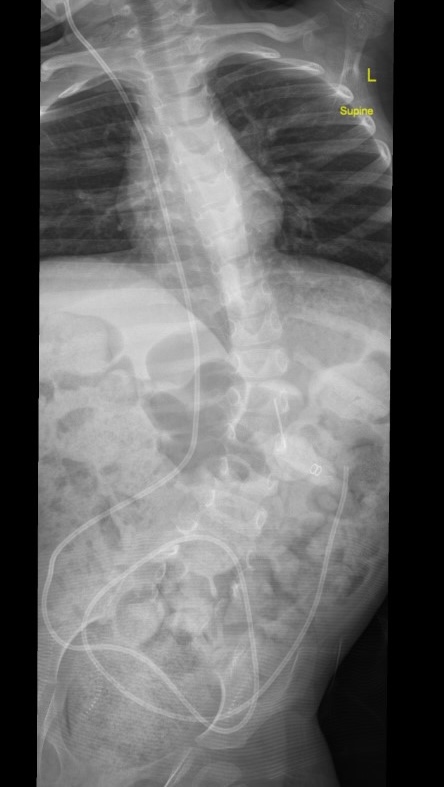
Etiology
| Neuropathic | Neuropathic | Myopathic |
|---|---|---|
|
Upper motor neuron - cerebral palsy (spastic quadriplegia 70%) - Friedrich's ataxia (100%) - Charcot-Marie-Tooth |
Lower motor neuron - spina bifida (60% myelomeningocele) - spinal muscle atrophy (high incidence) - polio - spinal cord injury (90% if pre-puberty)
|
Duchenne muscular dystrophy (80 - 100%) Myotonia dystrophica Arthrogryposis |
Natural history of neuromuscular curves compared with idiopathic
Younger onset with rapid progression
Progresses after skeletal maturity
Affects: walking / sitting in wheelchair / respiratory function
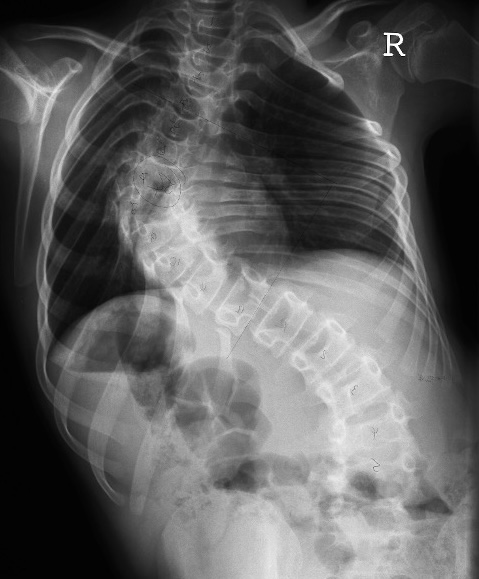
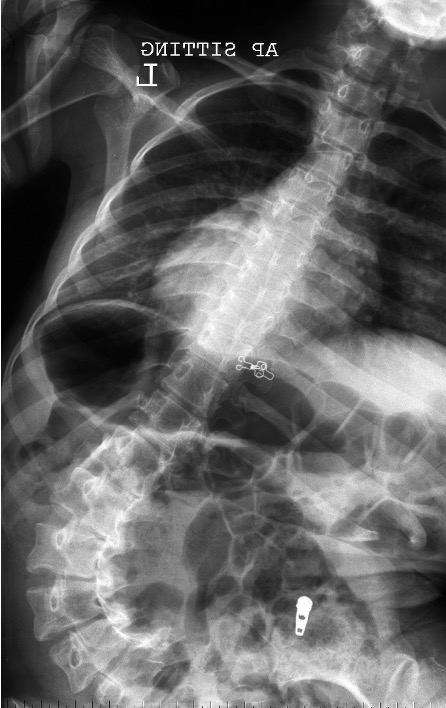
Xray
Long C shaped curve with cervical involvement and pelvic obliquity
Nonoperative management
Brace
Indications
Attempt to delay progression of curve until skeletal maturity
Options
TLSO
- 2 piece custom moulded
- worn during day while child is upright
- off at night
Seating
- Tumbleform seat: moulded seat for infants
- commercial chairs with pelvic support, abduction pillow, thoracic support, head support
- Moulded Sitting Support Orthosis (SS): custom fitted support made from patient mould
Operative management
Indication
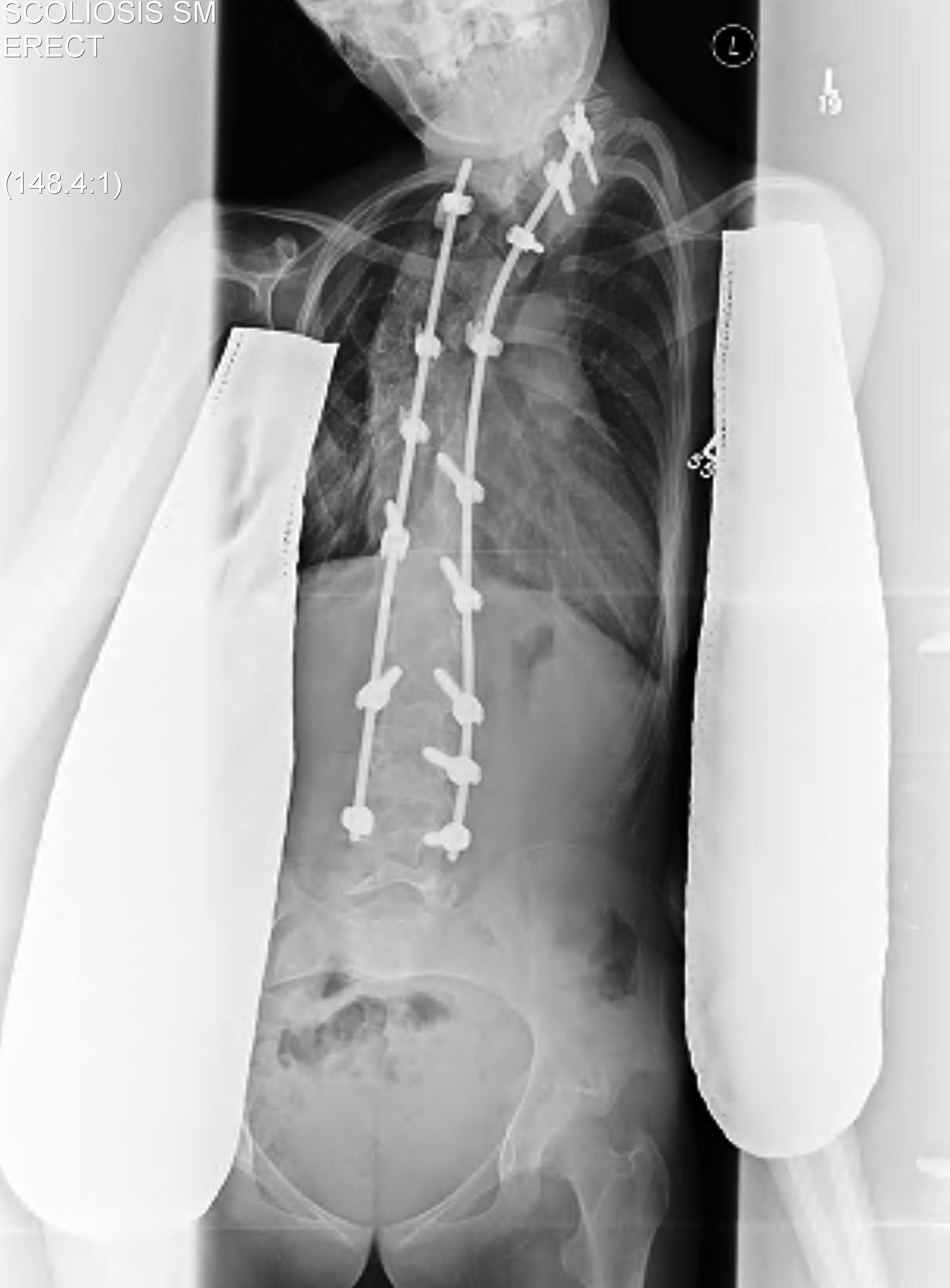
Curve > 50˚ in skeletally mature
Technique
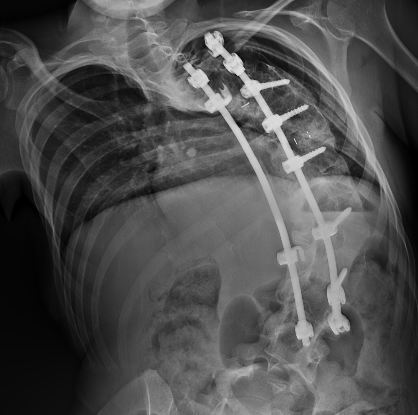
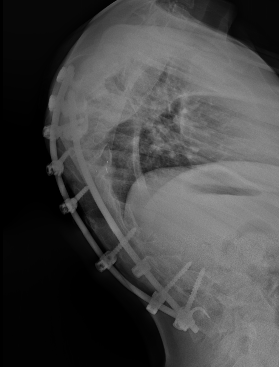
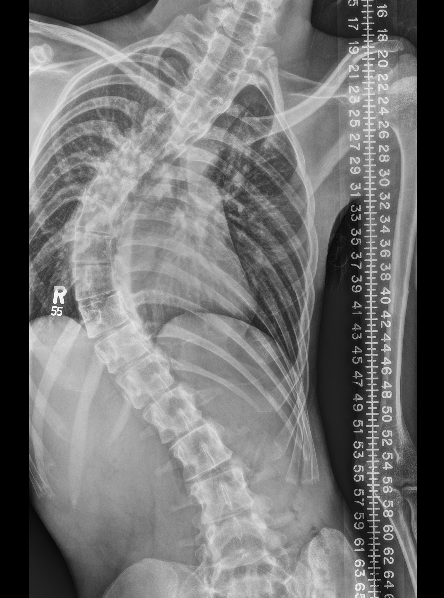
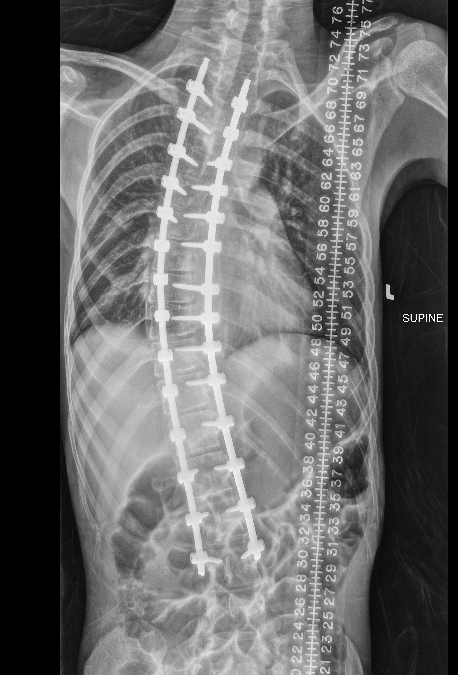
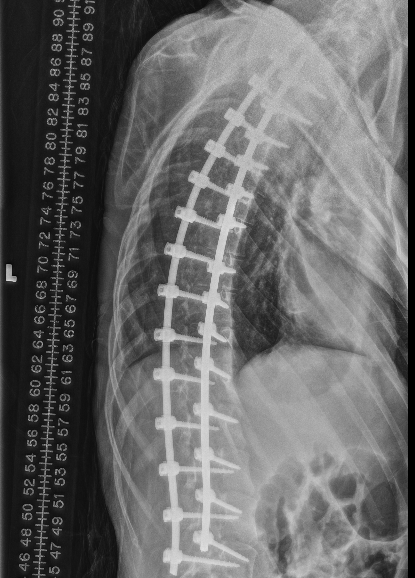
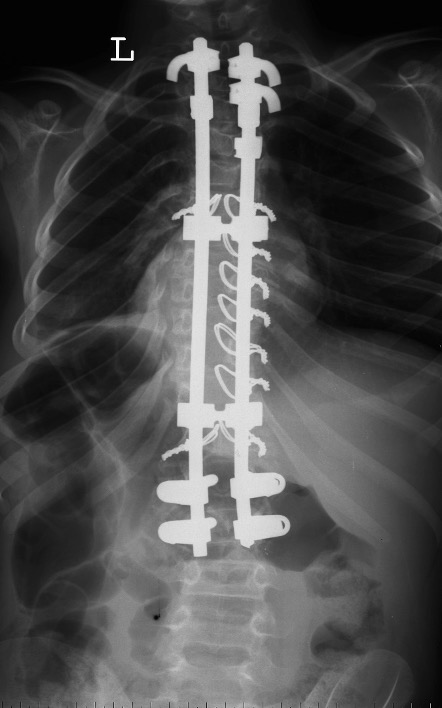
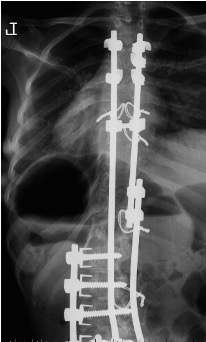
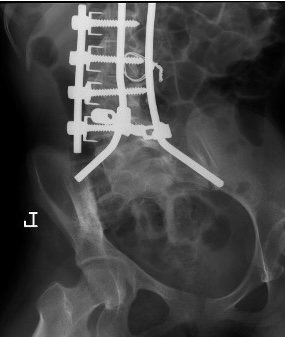
Long instrumented fusion
- proximally from T3
- caudally to pelvis if >15° pelvic obliquity
- to L4 or L5 if balanced
Complications
Increased bleeding - meticulous haemostasis / hypotensive anesthesia / haemodilution / cell saver
Pulmonary complicaton / pneumonia
SIADH
Infection
Neurological complications - curve > 90°
Osteopenic bone
High pseudarthrosis rate
Limited ambulation due to loss of trunk movement